


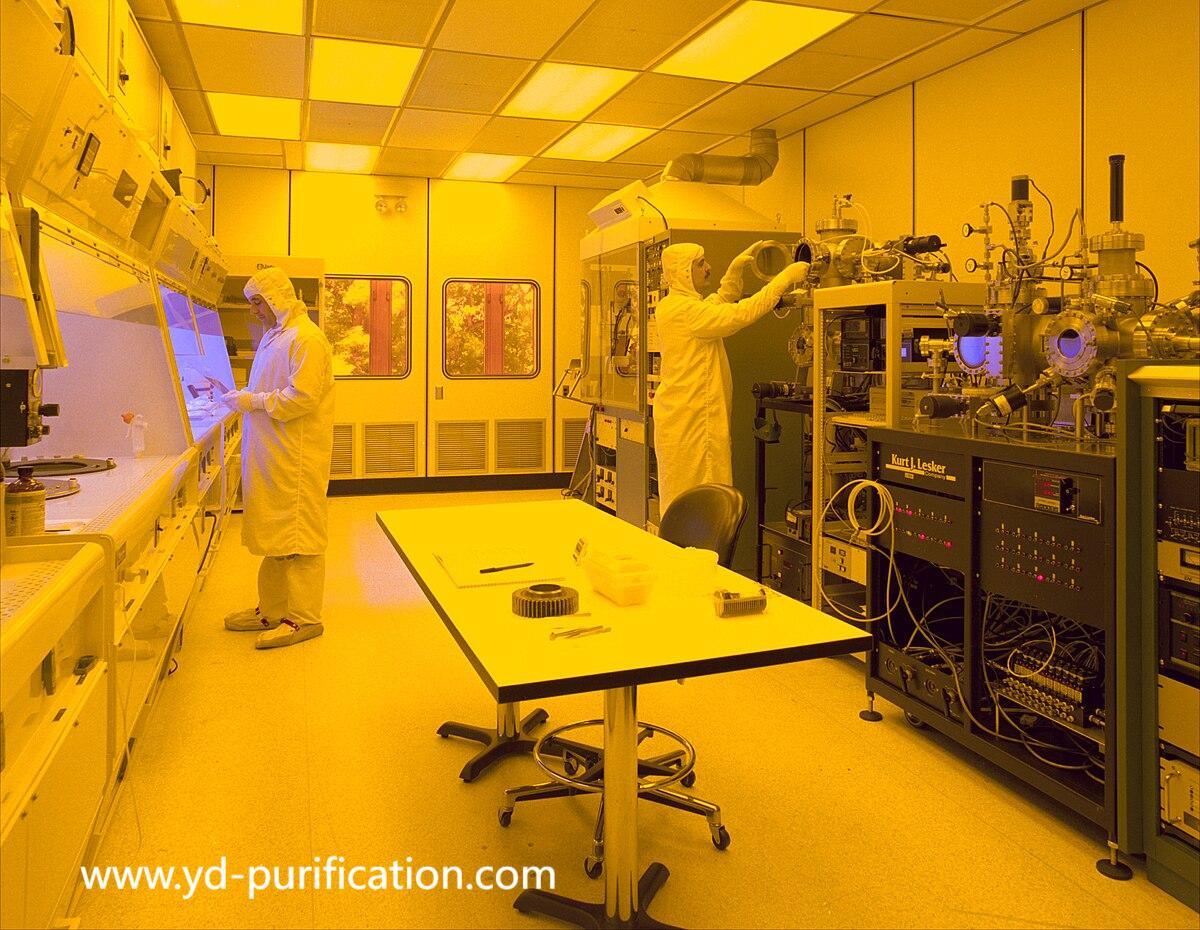
Clean Room engineering has become a central topic in modern industrial advancement as manufacturers, laboratories, and high precision facilities elevate their standards for air control and environmental stability, and many professionals searching for dependable systems turn to yd-purification for guidance, integrated materials support, and technical insight, prompting a deeper reflection on how a refined approach can shape future workflow efficiency?
Advanced Approaches to Controlled Spaces
Across global industries, the demand for purified environments continues to grow as production lines for pharmaceuticals, microelectronics, biotechnology, precision optics, and medical instruments expand their operations into zones requiring strict isolation of airborne particles, humidity ranges, and thermal consistency. These sectors value systems that maintain stable atmospheres, and the evolution of purification structures is now influenced not only by safety regulations but also by architectural strategies encouraging energy balance, layout flexibility, and reduced operational disruption. As the scale of delicate production increases, decision makers continually examine how structural materials, smooth panel surfaces, durable sealing components, and stable framing techniques contribute to environmental reliability within controlled facilities.
Material Integration and Structural Stability
Modern controlled space engineering now favors multi-layered composite configurations designed to support uniform airflow distribution while resisting corrosion and preventing surface degradation in extended operation cycles. Engineers who design technical interiors evaluate how compatible panels, insulated cores, and airtight joints work in coordination with ventilation mechanisms to support a balanced environment, especially in production halls where sensitive processes require accurate control across long work periods. With growing interest in sustainable building systems, material selection increasingly emphasizes low-emission structures, recyclable components, and integrated insulation, offering project teams efficient paths toward consistent environmental management while reducing structural stress and long-term wear across large-scale facilities.
Application Expansion in Specialized Facilities
Many enterprises deepen their investment in purification architecture as precision tasks expand into fields such as gene culture laboratories, medical packaging workshops, sterile manufacturing lines, and advanced equipment assembly stations. These spaces demand stable workflow routes, enlarged observation zones, and uniform temperature behavior, which influence planning decisions from partition layout to door system selection. The refined design of isolation structures allows technicians to maintain dependable production cycles while preserving containment standards that support certification processes. The increased interest in controlled spaces encourages planners to explore broader application possibilities while aligning with facility-specific operating models and environmental goals.
Environmental Management and Operational Reliability
Achieving a reliable internal environment depends on coordinated airflow guidance, pressure protection, moisture balance, and structural sealing. These aspects shape the daily performance of precision workshops where technicians operate sensitive tools, conduct sterile handling tasks, or oversee micro-scale assembly procedures that require strict cleanliness. As enterprises incorporate larger equipment and automated lines into their facilities, purification structures must offer spatial adaptability, installation convenience, and performance stability without interrupting existing operations. Integrated inspection approaches further assist managers in identifying pressure deviations, turbulence sources, and potential leakage points, ensuring facilities maintain uniformity in long-term operations.
Digital Insight and System Coordination
The broader industry trend toward intelligent supervision inspires discussions on data integration, sensor management, and visualization platforms embedded within controlled environments. Planners increasingly evaluate digital tracking options that allow real-time observation of temperature curves, humidity readings, airflow patterns, and pressure fluctuations across the facility. These digital advances encourage teams to adopt forward-thinking management habits while preparing facilities for future automation requirements and safety assessments. When technical departments collaborate with architectural planners, the resulting workflow architecture can support smoother production, clearer maintenance routines, and improved spatial understanding across various manufacturing clusters.
Integrated Solutions for Growing Industrial Needs
As markets advance toward higher production quality, companies continue searching for dependable resources that simplify planning work, reduce uncertainty, and improve environmental stability across extensive manufacturing zones. Firms looking for architectural components, application guidance, and functional materials often consult professional platforms such as https://www.yd-purification.com/ , which aggregate industry insight, structural resources, and engineering knowledge into one accessible channel, enabling planners to evaluate construction choices with greater confidence while shaping facilities capable of supporting long-term industrial progress.

 Arabic
 French
 Spanish
 Portuguese
 Deutsch
 Turkish
 Dutch
Dutch
 Italiano
 Russian
 Romaian
 Portuguese (Brazil)
 Tiếng Việt